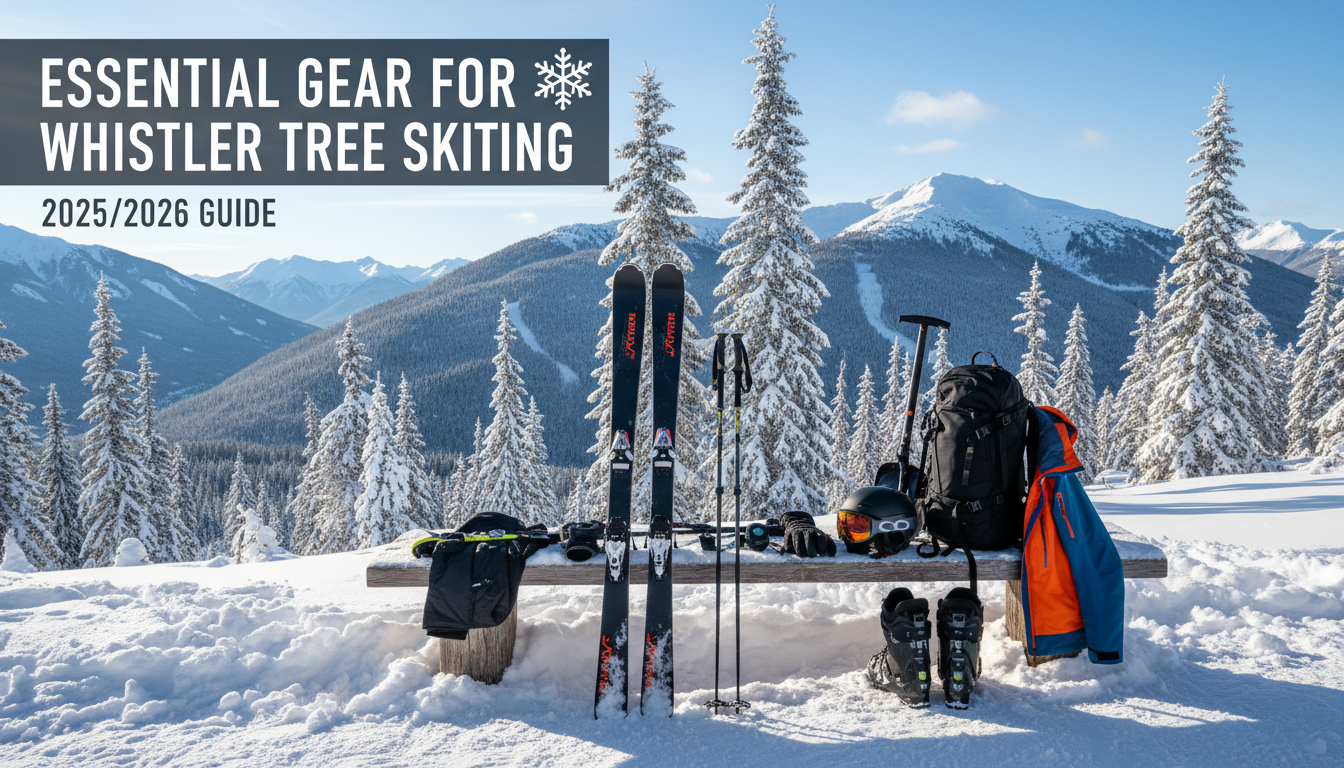


Best Gear for Whistler Trees? Don’t Buy Wrong – See This List 2025/2026 Guide
Choosing the right Whistler tree skiing gear is the difference between a fogged-out, soaked day and a confident, flowing run through the glades. Whistler’s coastal snow, famous “Coastal Cement,” and dark, foggy tree runs demand specialized goggles, outerwear and safety equipment that are very different from a typical Rockies setup.
🚀 Key Takeaways
- Vision is King: Whistler is darker and foggier than the Rockies; VLT 40%+ lenses are mandatory.
- Waterproofing Matters: Unlike Banff’s dry powder, Whistler snow is wet. Gore-Tex is an investment, not a luxury here.
- Safety First: Tree wells are a lethal hazard in the PNW. Always carry a whistle and ride with a buddy.
- Agility Over Speed: Choose gear that pivots easily; the trees in 7th Heaven are tight.
Navigation Guide
-
- Shell vs. Insulated Jackets
- 3. Hardgoods: Skis & Boards for Whistler Tree Skiing Gear Setup
- Ski Profile Recommendations
- 4. Safety Essentials: Tree Wells & Impacts
- The “Tree Runner” Kit
- 5. Budgeting: Whistler Tree Skiing Gear Cost Breakdown
- 6. Layering: Whistler Tree Skiing Gear Micro-Climate
- 7. Seasonality: Whistler Tree Skiing Gear Year-Round
- ❓ Whistler Tree Skiing FAQs
The Whistler Factor: Why Your Normal Gear Will Fail
Skiing the trees at Whistler Blackcomb is fundamentally different from skiing the Rockies or the Alps. Be fore you drop into the glades off the Peak Express or explore the hidden stashes of Crystal Ridge, you must understand the environment.
Whistler is a coastal mountain. This means two things: humidity and variable temperatures. The locals call the heavy, wet snow “Coastal Cement” for a reason. If your gear isn’t dialed in, you will be soaked by 11:00 AM, your goggles will fog instantly in the trees, and your day will be ruined. If you are used to the dry cold of Banff, you need to adjust your strategy.
The 20,000mm Waterproofing Rule
Whistler is a coastal range. Freezing levels fluctuate 1,000m in a single day. Gear rated 10k or 15k Hydrostatic Head will fail when sitting on a wet Creekside chairlift. You need 3-layer GORE-TEX Pro or eVent with a minimum 20,000mm rating. If water pressure exceeds the fabric rating, you freeze.
Check out our [Whistler vs Banff Canadian mountain resort guide] to understand these climate differences fully.
Avalanche Canada Whistler–Blackcomb avalanche forecast

1. Vision: The Most Critical Whistler Tree Skiing Gear
In the trees, depth perception is your lifeline. Whistler is notorious for “flat light”—a condition where the overcast sky eliminates shadows, making the snow look like a white sheet of paper. In the trees, this is compounded by rapid transitions from light to dark.
Do not use “Blackout” or dark mirrored lenses in Whistler trees, even on a partly cloudy day. The light fades fast in the heavy timber. Carry a spare “low light” lens in your jacket pocket.
Lens Technology Breakdown
You need lenses with high Visual Light Transmission (VLT). Look for VLT ratings between 40% and 60%. Technologies like Oakley Prizm Rose, Smith ChromaPop Storm, or Anon Perceive Cloudy are engineered specifically to pop contrast in gray conditions.This is why high-contrast, low-light goggles are the core of any Whistler tree skiing gear setup.
Comparison: Top Low-Light Lenses for Whistler
| Feature | Smith ChromaPop Storm | Oakley Prizm Hi-Pink | Standard Yellow Lens |
|---|---|---|---|
| VLT % | 50% (Excellent) | 46% (Superior) | 60-70% (Good) |
| Contrast Tech | Filters color crossover | Boosts detail | None (Flat color) |
| Fog Resistance | 5x Anti-Fog Inner | F3 Anti-Fog Coating | Basic |
| Price Est. | $120 (Lens only) | $100 (Lens only) | $40 (Lens only) |
Lens Tech: The 45% VLT Threshold
Grey or Black lenses are dangerous here. Whistler averages 200+ cloudy days a year. You need High-Viz Yellow, Pink, or Rose tints with a Visible Light Transmission (VLT) of 45-65%. Oakley Prizm Hi-Pink or Smith ChromaPop Storm Yellow are the standards. Polarization is bad; it hides ice patches in flat light.
2. Outerwear: Whistler Tree Skiing Gear for “Coastal Cement”
When you are tree skiing, you are in contact with nature. You are brushing against snowy branches, sitting on wet lifts, and potentially crashing in deep, heavy snow. If you wear water-resistant gear (5k-10k rating), the water will seep through under pressure.Waterproof, breathable shells form the backbone of reliable Whistler tree skiing gear because they keep you dry in heavy, wet snow.
For Whistler, we recommend a minimum waterproof rating of 20,000mm. Ideally, you want 3-Layer (3L) Gore-Tex or eVent fabrics. These allow sweat to escape (breathability) without letting the wet snow in.
Bibs > Pants. In the trees, deep pockets of powder are common. If you fall, snow goes up your back if you’re wearing standard pants. A high-chest bib keeps your core dry and warm. This is vital for those planning Heli Skiing in Whistler as well.
Shell vs. Insulated Jackets
Whistler is rarely arctic-cold (unlike Banff). It hovers around freezing. Therefore, a heavy down jacket is often too hot for active tree skiing. The best strategy is a non-insulated Shell combined with layers.
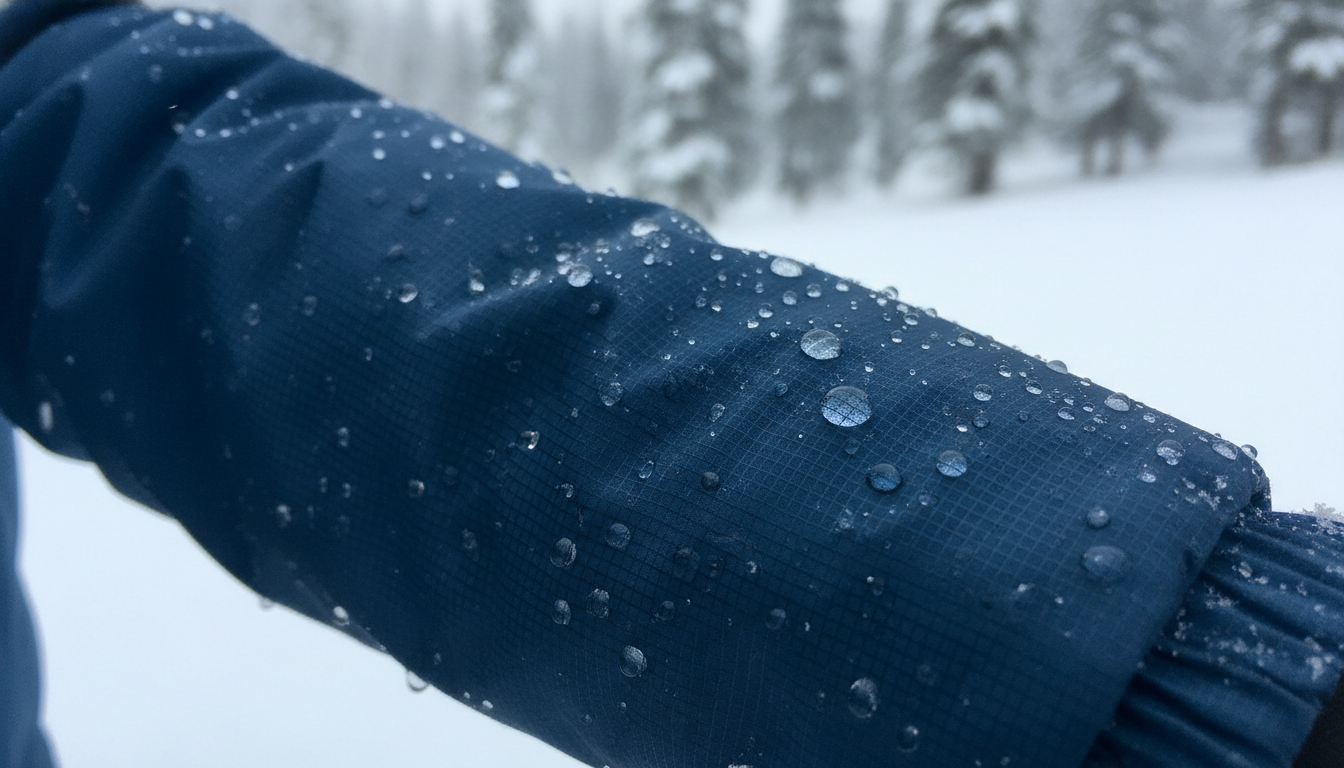
Water beading on 3-layer Gore-Tex ski shell jacket
3. Hardgoods: Skis & Boards as Whistler Tree Skiing Gear
If you are renting or buying gear specifically for a Whistler trip, leave the stiff, narrow carving skis at home. Tree skiing requires agility. You need to pivot instantly to avoid a tree trunk or navigate a tight chute.
Ski Profile Recommendations
- Waist Width: 100mm to 112mm underfoot. This provides float in the deep stuff but is narrow enough to turn quickly.
- Rocker: You need “Tip and Tail Rocker.” This lifts the ski out of the snow, allowing for “slarving” (sliding/carving) turns rather than locking you into a rail.
- Length: Don’t oversize. If you are between sizes, go slightly shorter for tree-specific riding to improve swing weight.
For snowboarders, directional volume-shifted boards (shorter and wider) like the Orca or Warpig are incredibly popular in Whistler’s tight terrain.
Planning to tackle the hardest terrain? Read our Whistler Blackcomb Expert Guide: Advanced Terrain Playbook before you go.
Ski Width: Floating on ‘Cement’
Utah powder is 4-7% water. Whistler powder is 12-15% water. Thin skis (<100mm) sink and hook in this heavy snow. The local sweet spot is 108mm-116mm underfoot. This width provides enough surface area to float *on top* of the heavy pack rather than trenching through it.
4. Safety Essentials: Whistler Tree Skiing Gear for Tree Wells & Impacts
The most overlooked danger in Whistler’s trees is the Tree Well. This is a void that forms around the base of a tree, hidden by low-hanging branches. If you fall headfirst into one, you can become trapped and suffocate. This happens every year in the Pacific Northwest.
No list of Whistler tree skiing gear is complete without a MIPS-equipped helmet and basic safety tools for navigating tight trees and hidden hazards.
The “Tree Runner” Kit
- Helmet with MIPS: Tree skiing involves hard objects. MIPS (Multi-directional Impact Protection System) reduces rotational forces on the brain during an angled impact.
- Whistle: Attached to your jacket zipper. If you are stuck in a well, yelling is muffled by snow. A high-frequency whistle cuts through the sound dampening.
- Recco Reflector: Most high-end gear has this built-in. It helps patrol find you if you are buried.
- Buddy System: Never ski trees alone. Maintain voice contact.
If you fall into a tree well, do not struggle. Struggling causes more snow to collapse on top of you. Make an air pocket in front of your face and blow your whistle.
tree wells and snow immersion suffocation hazards
Comms: The Cell Service Dead Zone
Cell service dies in the deep glades of Peak Creek and Khyber. Serious tree skiers use BCA Link 2.0 radios. Standardize your group on a privacy code. If you rely on a cell phone, keep it in an interior chest pocket to preserve battery; cold drains Lithium-Ion batteries in 30 minutes.
Pack Profile: The Snag Hazard
Large hiking packs snag on low branches, throwing you off balance. Use a low-profile, vest-style pack or a dedicated ski pack (15-20L max) with minimal exterior straps. Tuck all loose webbing. Being caught by a pack strap in a tree well is a suffocation accelerator.
Navigation: Offline Maps
Google Maps shows white space where the trees are. Download ‘Ullr Maps’ or FATMAP for Whistler before you go. These show specific glade runs and exit tracks. GPS works without cell signal, but only if the high-res terrain map is pre-loaded.
5. Budgeting: Whistler Tree Skiing Gear Cost Breakdown
Getting the right gear is expensive, but it’s cheaper than an injury or a ruined vacation. Below is a cost breakdown of renting premium gear in Whistler vs. buying, assuming a 5-day trip. Investing in the right Whistler tree skiing gear pays off every run, turning sketchy, low-visibility laps into confident, controlled tree skiing.
Price Comparison: Renting vs. Buying Premium Tree Gear
| Item | Premium Rental (5 Days) | Purchase Price (Est.) |
|---|---|---|
| Demo Skis/Board | $350 – $400 CAD | $800 – $1,100 CAD |
| Helmet (MIPS) | $60 – $80 CAD | $180 – $250 CAD |
| High-End Goggles | N/A (Buy Only) | $200 – $300 CAD |
| Gore-Tex Shell | $150 – $200 CAD | $500 – $800 CAD |
| Total | ~$600 CAD | ~$1,800+ CAD |
To offset these costs, make sure you are buying the right lift access. If you are skiing more than a few days, the 5 vs 10 Day Edge Card is significantly cheaper than window prices. Also, save on logistics by checking our Blackcomb Parking Guide to avoid overpriced lots.
Helmet Venting for Humidity
Goggle fog comes from your forehead, not the air. In 95% humidity, a helmet with poor venting traps heat, steaming your goggles instantly. Look for helmets with adjustable active venting (e.g., Smith Vantage). Open vents on the lift, close them on the descent.
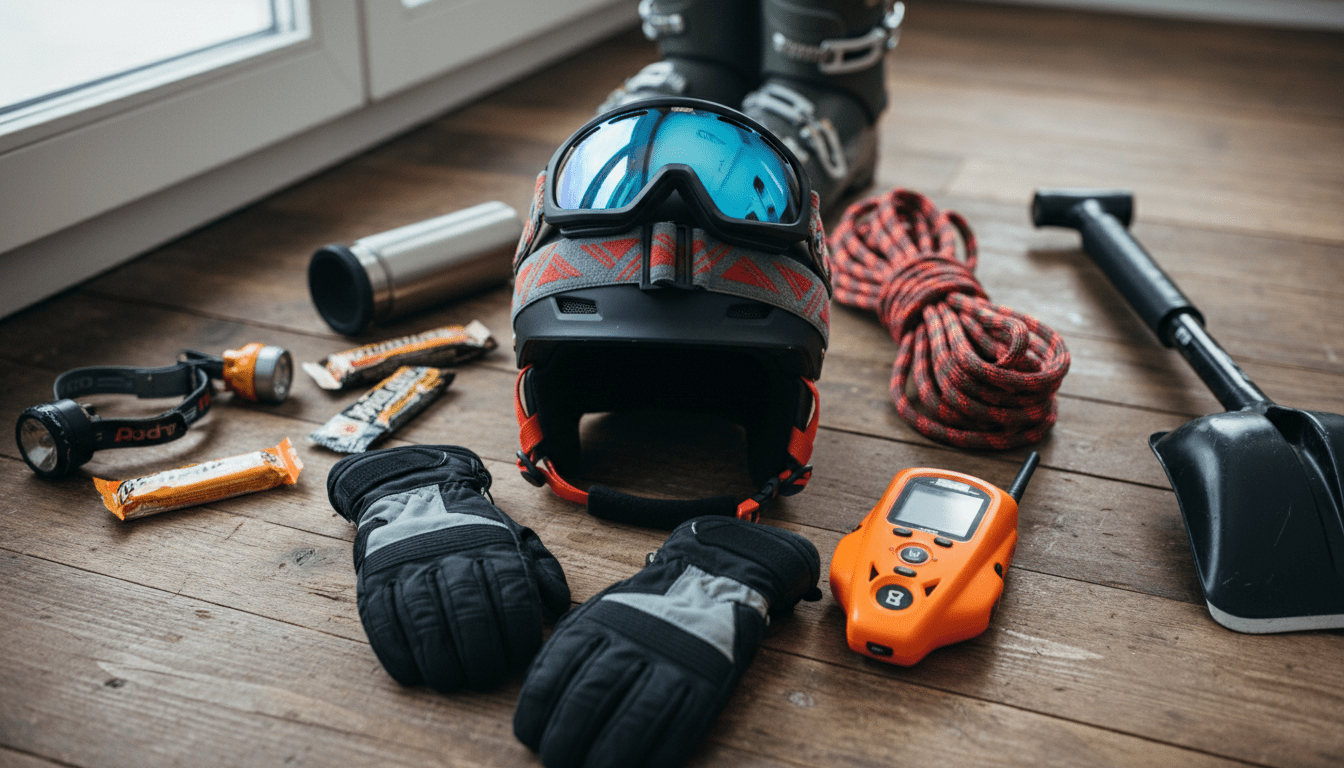
Flat lay of essential ski safety gear for Whistler tree skiing
6. Layering: Whistler Tree Skiing Gear Micro-Climate
Because Whistler’s freezing level fluctuates, you might be sweating at the base and freezing at the peak. Your layering system must be adaptable.
- Base Layer: Merino Wool is non-negotiable. Synthetics get stinky and clammy. Merino stays warm even when wet (remember the humidity).
- Mid Layer: Fleece or light synthetic down (Nano-puff). Avoid cotton hoodies; they absorb moisture and kill body heat.
- Gloves: Bring two pairs. A lighter pair for warm days and heavy Gore-Tex mittens for storm days. Wet hands end the day early.
For families traveling with kids, keeping them dry is even more important. If you are considering a trip to the Rockies as an alternative, check our Banff Ski Packages for Families guide to see how gear needs differ there.
Midlayers: Synthetic Only
Down insulation collapses when wet. Between high exertion in trees and high humidity, you will sweat. Once down gets wet, it loses 100% of its R-value. Use hydrophobic synthetic insulation like PrimaLoft or Coreloft. It keeps 90% of its warmth even when soaked.
7. Seasonality: Whistler Tree Skiing Gear Year-Round
While this guide focuses on winter tree skiing, many of these principles (waterproofing and layering) apply if you visit during the shoulder seasons for hiking. Whistler’s forests are lush because of the rain. If you visit in the off-season, check our Whistler Summer Guide for appropriate hiking gear adjustments.
❓ Whistler Tree Skiing FAQs
Click questions to expand/collapse – Essential gear answers for 2025/2026
❄️ What makes Whistler tree skiing gear different from Rocky Mountain setups?
Whistler’s coastal “Coastal Cement” demands specialized gear:
- Vision: VLT 40-60% low-light goggles for flat light fog
- Waterproofing: 3L Gore-Tex shells (20k+ rating)
- Hardgoods: 100-112mm waist skis + rocker profile
- Safety: MIPS helmets + tree well whistles
🧥 Do I need Gore-Tex for Whistler tree skiing waterproof gear?
Standard 10k fails by 11 AM in wet coastal snow:
- Minimum: 20k/20k 3-layer Gore-Tex or eVent
- Bibs > Pants: Prevents snow down back in tree powder
- Shell + layers: Better than insulated for active skiing
🌡️ Ideal goggle VLT for Whistler’s foggy tree runs?
VLT 40-60% mandatory (avoid blackout lenses):
| Lens | VLT | Best For |
|---|---|---|
| Smith ChromaPop Storm | 50% | Fog + Trees |
| Oakley Prizm Hi-Pink | 46% | Flat Light |
| Anon Perceive Cloudy | 55% | Glades |
⛑️ Best helmets for Whistler tight tree terrain?
MIPS-equipped essential for tree collisions:
- Smith Mission MIPS (ventilation)
- Oakley MOD1 MIPS (goggle fit)
- Anon Echo MIPS (budget)
🌲 Tree wells at Whistler Blackcomb danger?
3-5 PNW deaths yearly:
- Stay 2m from trunks
- Buddy maintains visual
- Zipper whistle essential
- Air pocket if trapped
Final Thoughts
Skiing the trees in Whistler is a bucket-list experience. The glades of Arthur’s Choice and Fraggle Rock offer some of the best terrain in North America. But the mountain demands respect. Don’t let a $50 pair of fogging goggles or a soaking wet jacket ruin your trip.
Invest in vision, waterproofing, and safety. Once your gear is dialed, the only thing you’ll need to worry about is finding the next stash of powder.
Ready to book your trip? Read our comprehensive Whistler Ultimate Guide: Everything You Need to Know to finalize your itinerary.




I’ll admit I was skeptical about your recommendation for the low-light rose lenses specifically for the Whistler glades. I usually run a polarized dark tint, but after hitting the trees off 7th Heaven yesterday in the flat light, I totally get it. The contrast enhancement you described is a game changer for spotting those hidden stumps.
I love the new wide-view goggles. They help you spot stumps early. However, make sure they fit your helmet well. Otherwise, they will fog up quickly.